
What is an LMS?
Wondering what an LMS is and how it can support your training delivery? Below, you’ll find a straightforward breakdown of the key features, benefits, and reasons why so many professional training organisations rely on an LMS to scale their programs efficiently and improve learner outcomes.
A Complete Guide for Professional Training Providers
A Learning Management System (LMS) is software that helps training organisations create, deliver, manage, and track their educational programs. Think of it as your digital training hub – a centralised platform where your learners access courses, complete tasks and assessments, and track their progress, whilst you manage enrolments, automate workflows, and generate detailed reports demonstrating program impact.
The global LMS market has experienced significant growth in recent years, driven by digital transformation and the widespread adoption of blended learning models that combine the best aspects of face-to-face instruction with flexible digital resources. Training providers increasingly recognise that an effective LMS is a strategic business asset that enhances program delivery, improves client satisfaction, and creates competitive advantage.


How Learning Management Systems Work for Training Providers
An LMS provides a structured environment that supports your training delivery, whether you're running intensive workshops, extended certification programs, or ongoing professional development.
For your learners, the experience begins with enrolment in your programs. Once enrolled, they access training content between face-to-face sessions, which could include pre-reading materials, videos, interactive modules, quizzes, and workplace application activities. The system tracks their progress automatically and issues certifications upon completion where applicable.
For you as the training provider, an LMS streamlines your entire business operation. You can upload or create content in various formats (including SCORM packages, PDFs, videos, and presentations), manage client accounts and their learners, deliver structured programs across weeks or months, monitor participant engagement and progress, generate detailed reports that demonstrate ROI to corporate clients, and automate administrative tasks that would otherwise consume valuable time.
This process ensures learners stay engaged throughout your program whilst you maintain visibility over delivery effectiveness and can demonstrate clear outcomes to your clients.
Core LMS Features That Drive Results for Training Businesses
Learn whether your course needs assessments and discover the key differences between award program assessments and professional development evaluations.
Content Management and Delivery
Your LMS serves as a centralised repository for all program materials. This ensures learners always access the most current information whilst you maintain consistency across cohorts and delivery teams. Your facilitators can focus on high-value face-to-face interaction whilst the platform handles content distribution and access.

Client and Learner Management
LMS platforms simplify the complexity of managing multiple client organisations and their learner groups. You can segment users by client organisation, program cohort, and completion status, manage multiple programs running simultaneously, automate enrolment and communication workflows, and track individual and group progress across your entire client base.

Assessment and Certification
Learning management systems provide comprehensive tools for testing knowledge retention and awarding credentials. Features include quizzes and assessments with various question types, automated grading and instant feedback, professional certification upon program completion, and digital badges that learners can share on LinkedIn and professional networks.

Reporting and Analytics for Client Value
Data-driven insights help you demonstrate the tangible value of your programs to corporate clients. Modern LMS platforms generate detailed reports on program completion rates and engagement metrics, assessment scores and knowledge application, participant progression through structured learning journeys, and capability development from program start to finish. These analytics help you to continuously refine your delivery approach and provide clients with clear evidence of return on investment.

Integration Capabilities
The best learning management systems don't operate in isolation. They integrate seamlessly with other tools training providers need, including payment processors for course sales and invoicing, video conferencing platforms for virtual sessions, and calendar systems for scheduling workshops and cohort sessions. This creates a cohesive learning environment where both learners and administrators can move effortlessly between tasks, resources, and activities.

Types of Learning Management Systems
Learning management systems come in several varieties, each designed for different organisational needs and deployment preferences:

Cloud-Based LMS (SaaS)
Cloud-based platforms have become the dominant model for training providers, offering immediate deployment without infrastructure investment, automatic updates and maintenance handled by the vendor, anywhere, anytime accessibility for distributed learner groups, and subscription-based pricing that reduces upfront costs. This model suits most training businesses, particularly those prioritising speed, scalability, and operational efficiency.
Distinguishing Professional LMS Training Programs
Understanding the different types of LMS platforms is crucial for training providers:
Academic LMS platforms
(such as Moodle, Blackboard,and Canvas)
are designed around semester-long courses, traditional grading systems, large student cohorts, and educational administrative processes. They excel in higher education environments but often feel rigid and academically focused when deployed for professional training delivery.

Corporate LMS platforms
(such as Cornerstone OnDemand, SAP SuccessFactors, and Docebo)
focus on internal employee development within a single organisation, emphasising compliance tracking and mandatory training, onboarding new hires, internal skill development programs, and integration with existing HR systems. These platforms are optimised for organisations managing their own workforce's learning needs – they're designed to be used by your clients, not by you as the training provider.

Professional training LMS platforms
like Guroo Academy
are purpose-built for training providers, consultancies, and educators who deliver programs to external clients. These platforms combine learning delivery with complete business management capabilities, including integrated payment processing and eCommerce, customer relationship management (CRM) tools for managing client accounts, cohort-based program delivery across weeks or months, work-integrated learning features that connect classroom learning to workplace application, and robust measurement for corporate clients.

For professional training providers, the distinction is critical: whilst corporate LMS platforms serve your clients' internal needs, professional training platforms provide the commercial infrastructure you need to run a successful training business whilst delivering high-quality blended learning experiences.
The Business Benefits of Implementing the Right LMS
Training providers implementing the right learning management system experience transformative benefits across multiple dimensions:

Enhanced Program Delivery
An LMS enables you to deliver richer, more engaging programs by extending face-to-face sessions with preparatory content that maximises workshop value, reinforcement activities that deepen learning between sessions, on-demand resources learners can access when needed, and structured application activities that connect classroom learning to workplace practice. Your facilitators can focus on high-value interaction, coaching, and discussion whilst the platform handles content delivery and progress tracking.
Scalability and Consistency
An LMS allows you to deliver standardised programs across multiple cohorts, client organisations, and geographic locations simultaneously. Wherever you are running your programs, every learner receives the same high-quality experience. This consistency enables you to scale your business without compromising quality or requiring proportional increases in facilitation resources.
Operational Efficiency
By centralising program resources and automating administrative tasks, an LMS significantly reduces operational overhead. You can eliminate time spent on manual enrolment processing, progress tracking and reporting, certification distribution, and repetitive communication. Your team can focus on program development, client relationships, and delivery excellence whilst the platform handles routine administration.
Improved Learning Outcomes
Modern learning management systems incorporate proven instructional design principles that enhance knowledge retention when combined with face-to-face delivery. They also centralise learning materials, making it easy for learners to access resources, revisit content, and stay engaged throughout the program. Spaced learning across multiple weeks, workplace application between sessions, immediate feedback on assessments, and peer interaction through discussion forums create more effective learning experiences than standalone classroom instruction.
Client Satisfaction and Retention
A professional LMS demonstrates your commitment to delivery excellence and modern learning approaches. Corporate clients increasingly expect blended delivery models, detailed reporting on participant progress, measurable impact on capability development, and professional digital experiences that reflect well on their investment. The right platform helps you meet and exceed these expectations, leading to repeat business and expanded client relationships.
Competitive Differentiation
Whilst many training providers still rely on face-to-face delivery alone, those offering sophisticated blended programs supported by robust technology create clear competitive advantages. You can pitch more comprehensive solutions, demonstrate superior outcomes, command premium pricing, and win larger corporate accounts.
LMS Use Cases for Professional Training Providers
Learning management systems support diverse delivery models across different course types:

Certification and Accreditation Programs
Training providers use LMS platforms for multi-week certification programs combining workshops with online learning, professional development courses with ongoing workplace application, industry qualifications requiring structured assessment, and continuing professional education.

Blended Learning Programs
The most effective professional development combines multiple delivery modes. Your LMS supports pre-program diagnostics and content, face-to-face workshops and intensive sessions, inter-session workplace application activities, post-program reinforcement and coaching, and ongoing access to resources and community.

Corporate Skills Development
When delivering to corporate clients, an LMS enables leadership and management development programs, technical and professional skills training, compliance and regulatory training with audit trails, and custom programs tailored to client needs.

Client Training and Enablement
Some training providers offer their LMS as an added-value service, delivering onboarding for clients' new products or services, technical training and support documentation, user certification and competency tracking, and partner programs.
Key LMS Trends Shaping 2025 and Beyond
The learning management system landscape continues to evolve, with several trends reshaping how training providers deliver programs:
Work-Integrated Learning
The most effective professional development doesn't happen in isolation from work. Modern learning management systems support structured workplace application activities between face-to-face sessions, manager involvement in coaching and reinforcement, action learning projects that solve real business problems during the program, and immediate transfer of classroom learning to on-the-job performance. This approach significantly improves both learning outcomes and client satisfaction.

What Professional Training Providers Need in an LMS
If you're delivering professional development programs to corporate or individual clients, your requirements differ significantly from those of organisations training their own employees:
-
Complete Customer Journey Management
Professional training providers need platforms that handle the entire sales and delivery cycle, from course discovery and enquiry through to payment processing and post-program follow-up. This means integrated eCommerce functionality, customer relationship management (CRM) capabilities for managing client accounts, automated communication workflows throughout the learner journey, and revenue analytics showing which programs drive business growth.
-
Cohort-Based Program Support
Some professional development programs work best when learners progress together through structured experiences over several weeks or months. Your LMS should facilitate group management and peer interaction, scheduled content release aligned with workshop sessions, blended learning combining face-to-face and online components, and manager integration for workplace application between sessions.
-
Work-Integrated Learning Features
Professional training must connect classroom theory to workplace practice. Look for platforms supporting action learning projects completed during programs, workplace application assignments between face-to-face sessions, on-the-job practice structured into the learning journey, and tools for participants' managers to coach and reinforce learning.
-
Impact Measurement and ROI Demonstration
Corporate clients expect evidence that programs deliver business value. Your LMS can help with diagnostic assessments that show before-and-after capability development, competency frameworks that track skill progression throughout the program, confidence and application measures beyond simple completion rates, and analytics that connect learning activities to performance outcomes, allowing you to share them with client sponsors.
-
Support for Face-to-Face Delivery
Rather than replacing face-to-face training, your LMS should enhance it by managing pre-program preparation that maximises workshop value, coordinating resources and activities across multiple workshop sessions, supporting workplace application, tracking attendance and participation across blended programs, and maintaining engagement between face-to-face touchpoints.
-
Business Growth Tools
Beyond course delivery, training providers need platforms that support business development, including lead nurturing and conversion workflows, corporate account management and relationship tracking, repeat business and program expansion opportunities, and client relationship visibility across your entire team.
Guroo Academy: Purpose-Built for Professional Training Providers
We understand that professional training providers have unique requirements that generic LMS platforms simply don't address. Our platform combines excellent learning delivery with comprehensive business management tools specifically designed for organisations delivering skills-based professional development.
Designed for Commercial Training Delivery
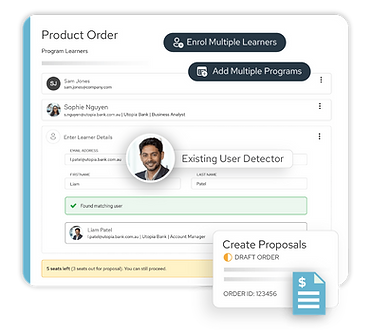
Guroo Academy streamlines the complete customer journey from discovery to purchase. With integrated payment processing via Stripe, built-in CRM capabilities for nurturing client relationships, automated enrolment and communication workflows, and professional, commercial-grade user interfaces, our platform helps you focus on creating great content and delivering exceptional face-to-face sessions whilst we handle the operational complexity.




Choosing the Right LMS: Key Considerations
Selecting a learning management system is a strategic decision that impacts your operational efficiency, learning outcomes, and business growth. Consider these critical factors:
1
Alignment with Your Delivery Model
Does the platform support your specific format, such as intensive short courses, extended certification programs, or ongoing professional development? Ensure the LMS accommodates your instructional design approach rather than forcing you to adapt to platform limitations. If you deliver blended programs that combine workshops with online learning, the platform should support this model seamlessly.
4
Integration and Workflow
Some training providers offer their LMS as an added-value service, delivering onboarding for clients' new products or services, technical training and support documentation, user certification and competency tracking, and partner programs.
2
Target Audience Requirements
When delivering to corporate clients, an LMS enables leadership and management development programs, technical and professional skills training, compliance and regulatory training with audit trails, and custom programs tailored to client needs.
5
Total Cost of Ownership
Look beyond headline pricing to understand the complete cost structure. Free or low-cost platforms often require significant additional investment in technical resources, third-party tools, and customisation. Conversely, all-inclusive platforms provide better value despite higher upfront costs by eliminating hidden expenses.
3
Business Growth Support
The most effective professional development combines multiple delivery modes. Your LMS supports pre-program diagnostics and content, face-to-face workshops and intensive sessions, inter-session workplace application activities, post-program reinforcement and coaching, and ongoing access to resources and community.
6
Support and Partnership
Professional training is competitive. Look for LMS providers who understand your industry challenges and offer genuine partnership, including strategic guidance, regular platform improvements, and responsive support.
Common LMS Implementation Challenges and How to Avoid Them
Even the best learning management systems can fail to deliver value if implemented poorly. Be aware of these common challenges:
Insufficient Planning and Requirements Gathering
Rushing into LMS selection without clearly defining your needs can lead to choosing platforms that lack critical capabilities.
Invest time upfront identifying your must-have features, understanding your learners' expectations, mapping your complete learning and business processes, and defining success metrics beyond simple adoption.

Poor Content Migration and Organisation
Transferring content from legacy systems into a new LMS requires careful planning.
Establish clear organisational structures before migration, review and update content during transfer rather than automatically copying outdated materials, and create clear navigation helping users find relevant resources quickly.

Inadequate Change Management
Users resist new systems, particularly when transitioning from familiar processes.
Successful implementations include comprehensive training for your delivery team and administrators, clear communication about benefits and changes to clients, a phased rollout that allows for adjustment and feedback, and ongoing support that addresses user concerns and questions.
Neglecting the User Experience
Even powerful platforms fail if learners find them confusing or cumbersome.
Prioritise intuitive navigation and clean design, mobile optimisation for learning anywhere, quick access to relevant content without unnecessary clicks, and consistent branding, maintaining your professional appearance.
The Future of Learning Management Systems
As we look beyond 2025, several developments will continue reshaping the LMS landscape:
Artificial intelligence will become increasingly sophisticated, moving beyond basic recommendations to adaptive learning paths that adjust in real-time based on learner performance, intelligent learner support systems providing personalised feedback, and automated content creation reducing development time.
Skills-based architectures will shift focus from courses to competencies, with learning management systems tracking and verifying specific skills rather than simply recording course completions. This aligns with broader workforce trends emphasising capabilities over credentials.
Deeper integration with business systems will make LMS platforms central components of training business infrastructure, alongside CRMs and financial systems, enabling holistic views connecting learning delivery to business performance and client satisfaction.

Conclusion: Making the Right LMS Choice for Your Success
A learning management system is far more than software for hosting courses online. For professional training providers committed to delivering exceptional blended learning experiences, the right LMS becomes a strategic asset that streamlines operations, enhances face-to-face delivery, strengthens client relationships, demonstrates measurable impact, and drives sustainable business growth.

The key is finding a platform that aligns with your specific needs as a training business. Generic solutions force compromises and workarounds that limit effectiveness and create frustration. Corporate LMS platforms are designed for internal employee training, not for running a training business. Academic platforms feel institutionally focused rather than professionally oriented.
Purpose-built platforms designed specifically for professional training providers understand the unique challenges you face and provide the tools needed to address them effectively. From work-integrated learning features and impact measurement to business management capabilities and support for blended delivery, the right LMS transforms how you create and deliver programs whilst positioning you for long-term success.
As the learning technology landscape continues to evolve, training providers that invest in platforms supporting their strategic goals will build sustainable competitive advantages through superior learning outcomes, stronger client relationships, and the ability to scale quality delivery.
Ready to See How the Right LMS Can Transform Your Training Business?
Guroo Academy is purpose-built for professional training providers who want to scale their operations, strengthen client relationships, and deliver high-impact blended learning experiences. Our platform combines excellent course delivery with comprehensive business management tools designed specifically for professional development.
Whether you're launching new programs, enhancing your face-to-face delivery with digital components, or looking to win more corporate accounts through superior platform capabilities, we'd love to show you how Guroo Academy can support your success.
Book a demo to see how the right learning management system can help you grow your training business.